
Effects of using a low slippage percentage
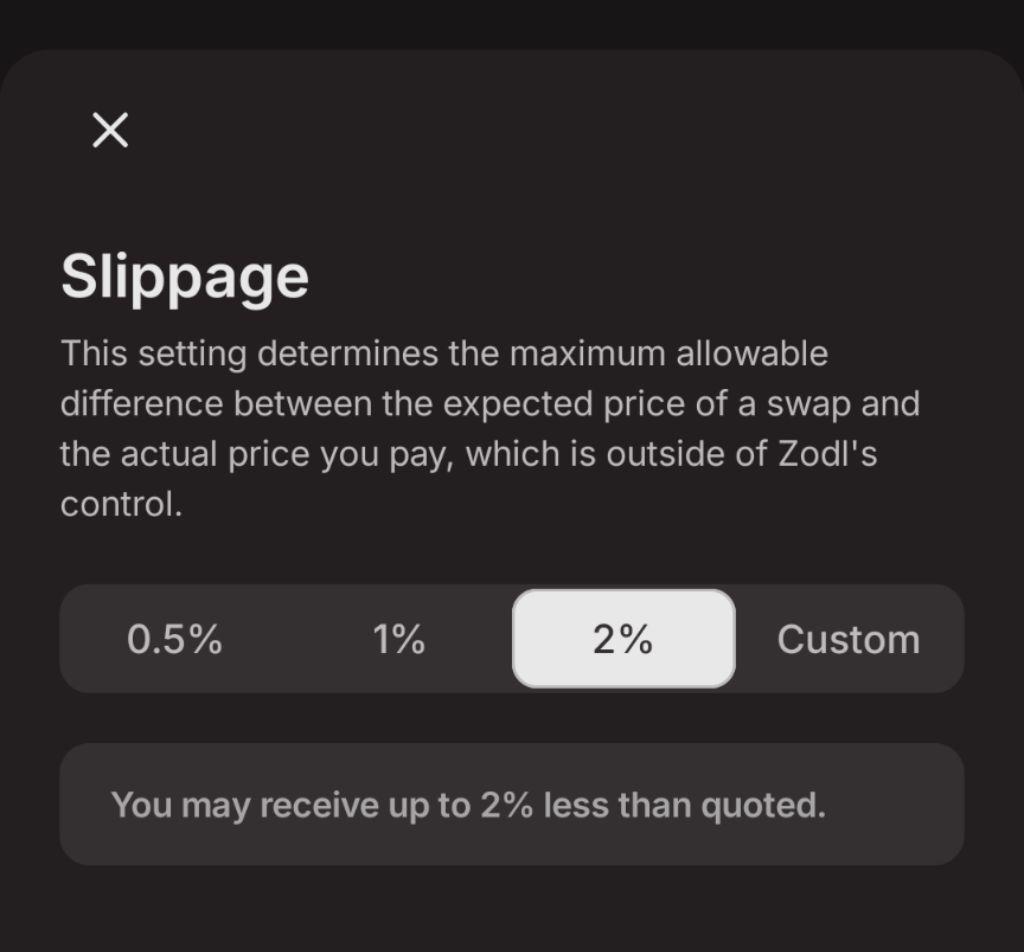
When performing a Swap or CrossPay in Zodl, you'll see a slippage tolerance setting with a default value of 2%. This setting defines the maximum price movement you're willing to accept between the time your swap is quoted and when it fulfills.
Lowering this value may seem like a way to get a better price, but it can have the opposite effect: your swap may take significantly longer, or it may fail to complete altogether and be refunded.
Why slippage matters
Slippage acts as a ceiling, not a target. You'll still receive the best available price on NEAR Intents at the time of fulfillment – the percentage simply sets the maximum deviation allowed before the swap is rejected to protect you from overpaying.
If market depth isn't sufficient to meet a very tight slippage (for example, 0.25%), one of two things will happen:
- The swap will wait for better market conditions, taking longer to complete
- The swap will fail and be refunded to your provided refund address
Our recommendation
We recommend setting your slippage to at least 2% or higher to ensure the greatest chance of completion. You'll still get the best available price, and your swap is far more likely to complete in a timely manner.
This is especially important for:
- Larger swap amounts, where market depth is more likely to be a factor
- Less liquid tokens, where tight slippage is harder to meet
- Volatile market conditions
In times of extreme price swings, the default 2% may be insufficient and should be set higher.
Important note
Neither ZODL nor NEAR are responsible for missed opportunities due to issues relating to swap fulfillment. All swaps are subject to NEAR's Terms of Service.
Related articles
If your swap was refunded or is taking longer than expected, see our articles on checking your swap's status and obtaining a refund.